UK · Q2 2026
20mm Interlock Sliding Doors UK
What 20mm interlock actually means
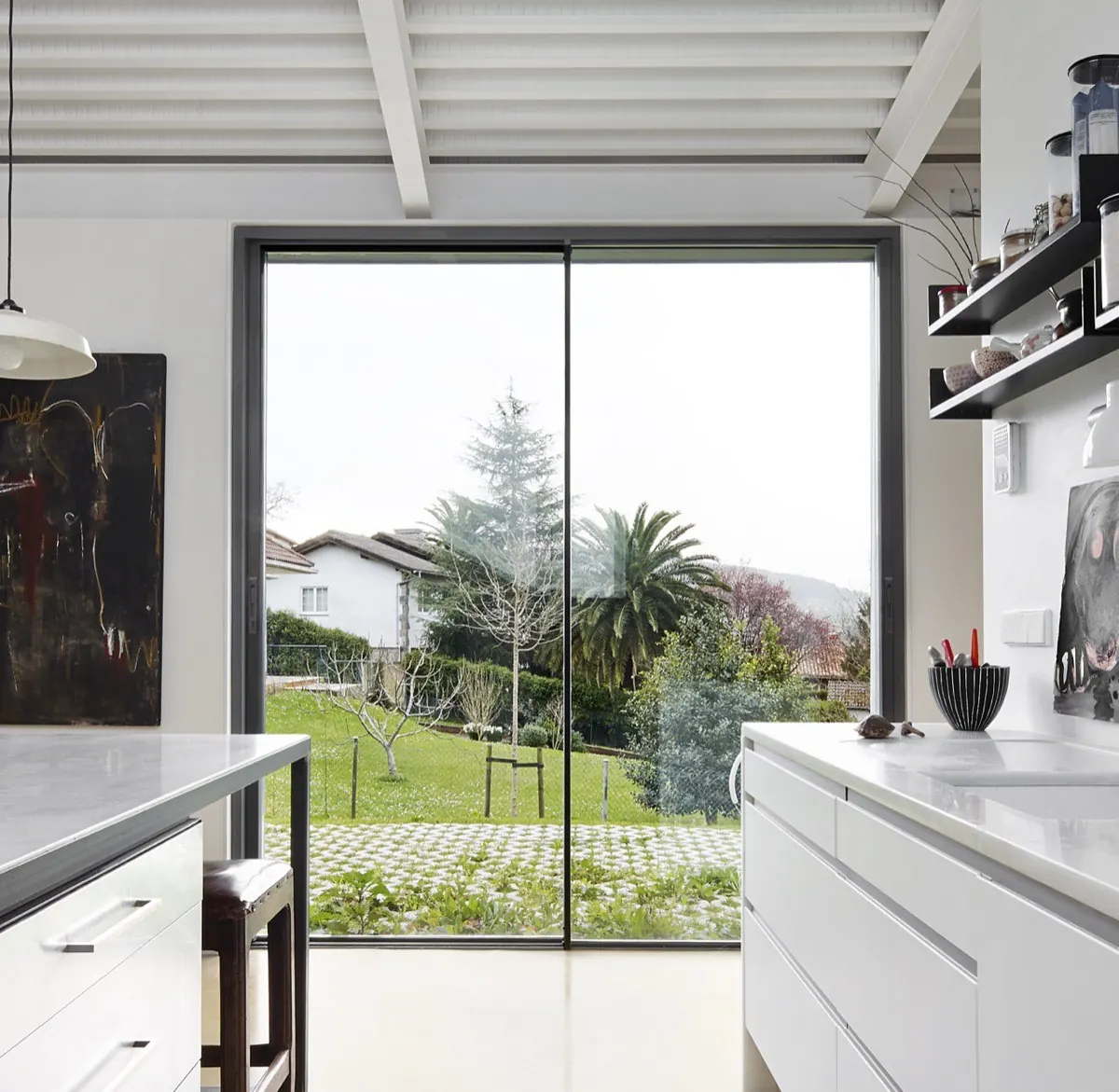
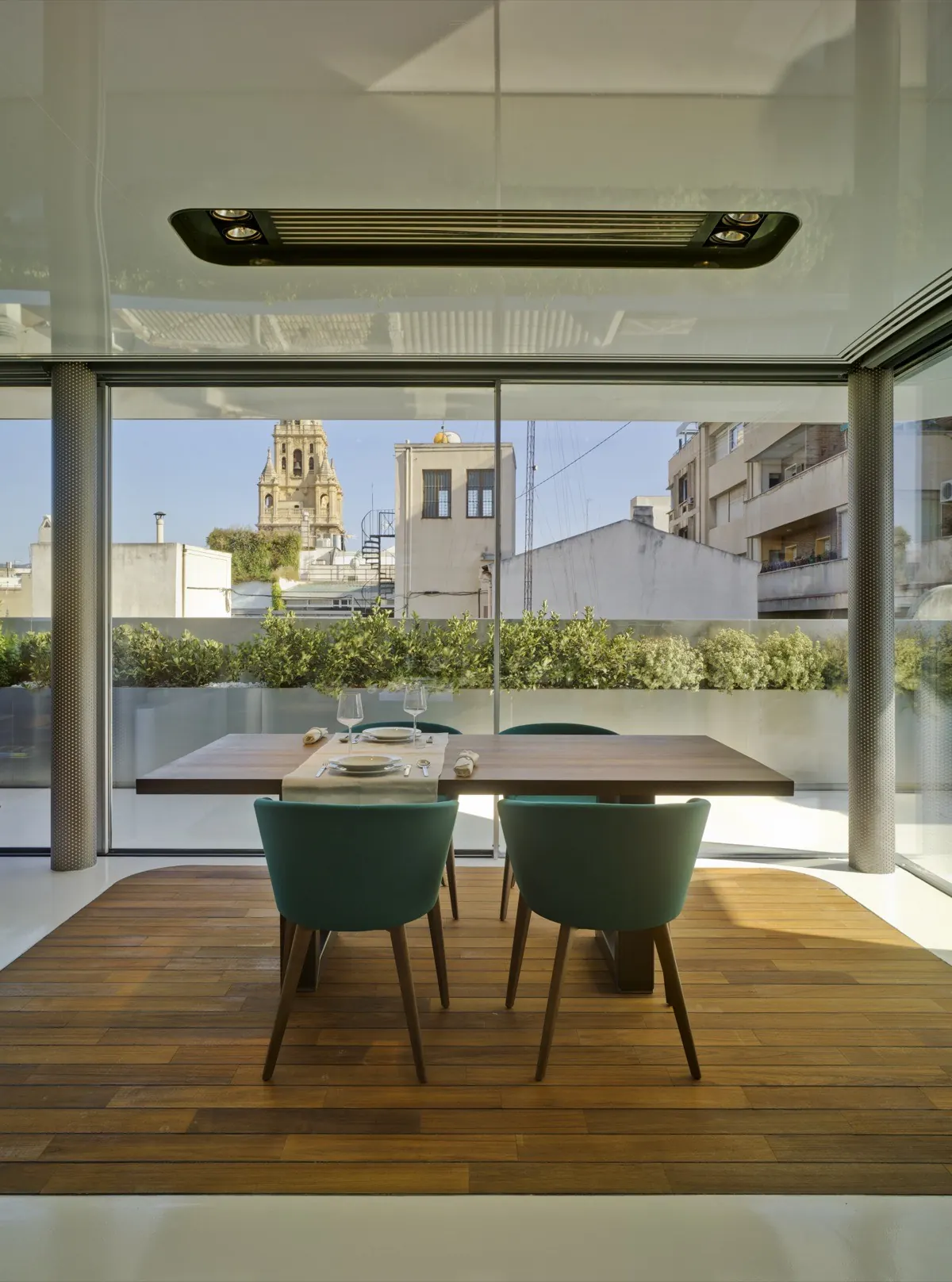
The central junction, which Schüco calls the interlock face width, is the vertical aluminium bar that runs floor to ceiling where two sliding sashes meet. It sits at eye level when the door is closed and it is the part of the frame you notice most. A 20mm junction is roughly the width of a finger. Looking out across a kitchen extension to the garden, that is the difference between seeing a frame and seeing a view.
Cortizo publishes 20mm for COR Vision Sliding, which Apex fits as APX20 Ultra Slim. Its larger sibling COR Vision Plus Sliding, which Apex fits as APX20 Plus, is published at 25mm, and it is the system to use when the sashes get big. Schüco publishes a 40mm interlock face width on the ASE 60 and ASE 80.HI Design Line, and Reynaers publishes a 50mm chicane on MasterPatio.
The 20mm vs near-slim spec table
Cortizo's COR Vision Sliding against the closest alternatives available in the UK. Every figure is the manufacturer's own published limit or published "from" value. Where a manufacturer does not publish a figure, the cell says so.
| System | Central junction / interlock | U-value, from | Max sash (W × H) | Max weight |
|---|---|---|---|---|
| Cortizo COR Vision Sliding (Apex APX20 Ultra Slim) | 20 mm | 1.3 W/m²K | 2500 × 3000 mm | 320 kg |
| Cortizo COR Vision Plus Sliding (Apex APX20 Plus) | 25 mm | 0.9 W/m²K | 4000 × 4000 mm | 400 kg manual |
| Schüco ASE 60 | 40 mm Design Line | 1.1 W/m²K | 3500 × 3500 mm | 500 kg |
| Schüco ASE 80.HI | 40 mm Design Line | 0.99 W/m²K | 3500 × 3500 mm | 500 kg |
| Reynaers MasterPatio | 50 mm chicane | 0.8 W/m²K | 3000 × 3600 mm | 600 kg slider |
| Cortizo 4700 Sliding (Apex APX47) | 50 mm sash | 1.0 W/m²K | 2500 × 3000 mm | 300 kg |
The trade-off, what 20mm can't do
A 20mm central junction is a lighter section than a 25mm or 40mm one. There is less aluminium carrying the load, and that shows up directly in the published sash and weight limits. If your opening pushes against those limits, 20mm is not the right system.
| Constraint | COR Vision Sliding (20mm) | COR Vision Plus (25mm) / Schüco ASE (40mm) |
|---|---|---|
| Max sash (W × H) | 2500 × 3000 mm | 4000 × 4000 mm / 3500 × 3500 mm |
| Max sash weight | 320 kg | 400-700 kg / 500 kg |
| Glazing thickness | 26-30 mm | 36-56 mm / 24-60 mm |
| Published U-value, from | 1.3 W/m²K | 0.9 W/m²K / 0.99-1.1 W/m²K |
| Burglar resistance to BS EN 1627 | PAS 24 available | PAS 24 available / up to RC2 and RC3 |
When to specify 20mm
The brief that justifies 20mm:
| Scenario | Why 20mm matters |
|---|---|
| Architect-led contemporary build | Frequently specified, anything much thicker undermines the brief. |
| Garden-view rear extension | The junction sits at eye level and dominates the view across the kitchen-diner. |
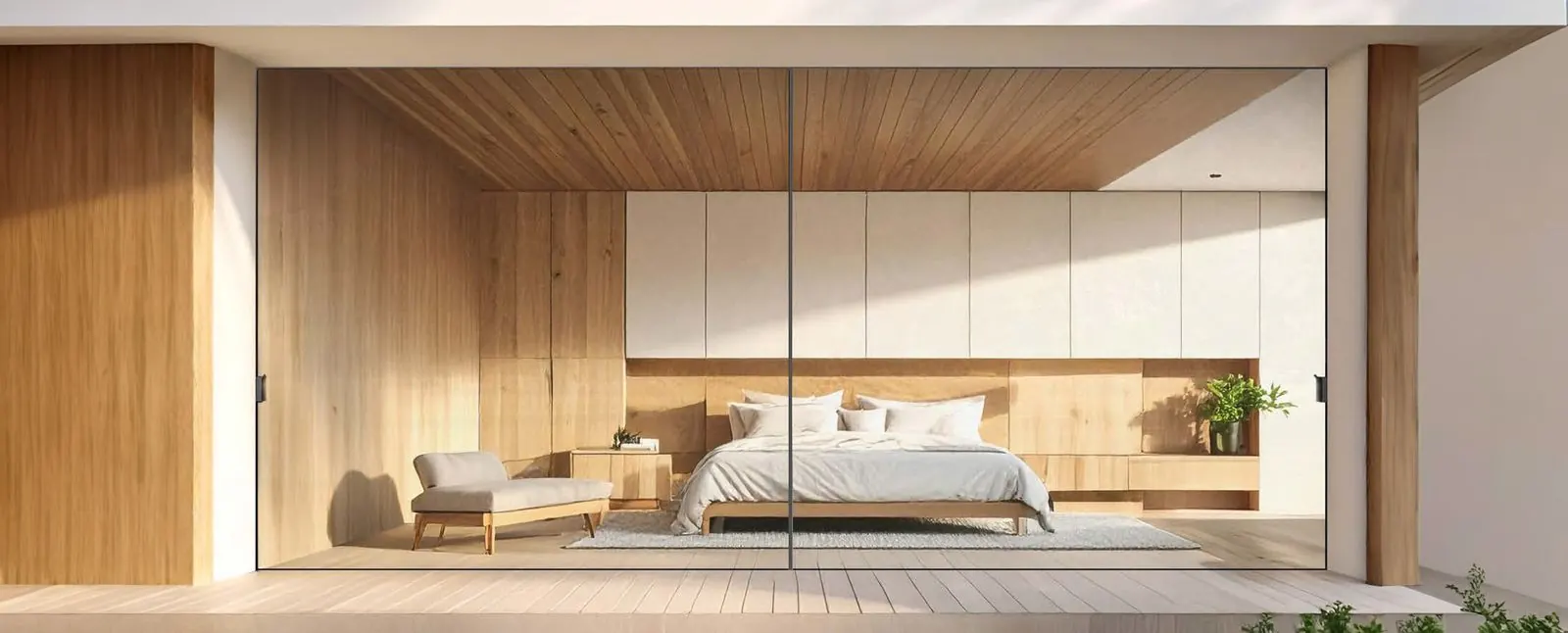
| 'Almost frameless when closed' brief | 20mm is the closest mainstream alu slider to a frameless aesthetic. |
| Low ceiling height (under 2.5m) | Frame width matters more proportionally, a narrower junction means a larger relative glass area. |
| Premium spec fit-out | COR Vision is a recognised system among architects and high-end developers. |
When NOT to specify 20mm
The brief that pushes you to 30-45mm:
| Scenario | Better choice |
|---|---|
| Opening larger than 2500mm wide per sash | APX20 Plus or Schüco ASE, both take much larger sashes. |
| RC2 to BS EN 1627 required | Schüco ASE 60, published up to RC2; ASE 80.HI up to RC3. |
| Standard suburban patio replacement | At small sizes the junction width is rarely the thing you notice. |
| Listed building or front elevation | Aluminium is rarely approved, timber sliding sash instead. |
| Very heavy sashes | Schüco ASE 60 or ASE 80.HI, published to 500kg per vent. |
What a 20mm door costs
These systems are made to order, so a fitted price depends on the width and height of the structural opening, the number of panes, the glass specification, the threshold detail, the colour and site access. We quote after a survey rather than from a list, because a number given without one is a number we would have to change. Every Apex quote includes the frame, glazing, fitting, removal of the existing door, FENSA self-certification under Reg 40373 and our 10-year guarantee.
Frequently asked
What is a 20mm interlock sliding door?
The interlock, which Cortizo calls the central junction, is the vertical bar where two sliding sashes meet at eye level. On a 20mm system that bar is 20mm wide, roughly the width of a finger. It is the single figure that determines how much frame you see when the door is closed, which for most London rear extensions is most of the year.
Which 20mm systems are available in the UK?
Cortizo COR Vision Sliding publishes a 20mm central junction, and Apex fits that system as APX20 Ultra Slim. It is worth being precise about the rest of the market: Cortizo's COR Vision Plus Sliding publishes 25mm, Schüco publishes a 40mm interlock face width on the ASE 60 and ASE 80.HI Design Line, Reynaers publishes a 50mm chicane on MasterPatio, and Smart Systems publishes 83mm on Visoglide Plus. Origin publishes a sightline of 29mm on OS29+ but no interlock figure, so it is not directly comparable.
How much does a 20mm interlock sliding door cost?
These doors are made to order, so the fitted cost depends on the structural opening, the number of panes, the glass specification, the threshold detail, the colour and site access. We quote after a survey rather than from a price list. Every Apex quote includes the frame, glazing, fitting, removal of the existing door, FENSA self-certification under Reg 40373 and our 10-year guarantee.
What are the limits of a 20mm junction?
There is less aluminium in the section, so it carries less glass. Cortizo publishes a maximum sash of 2500 × 3000mm at 320kg for COR Vision Sliding, with glazing from 26 to 30mm. If you need more than that, COR Vision Plus Sliding at a 25mm junction takes 4000 × 4000mm at 400kg by hand or 700kg motorised with glazing to 56mm, and Schüco ASE 60 and ASE 80.HI take 3500 × 3500mm at up to 500kg.
When should I specify 20mm?
Specify 20mm when the sightline is the brief: architect-designed contemporary builds, garden-view rear extensions, and rooms where the junction at eye level dominates the view. It is the right call whenever you want the door to read as close to frameless as a mainstream aluminium slider gets, and where the sash sizes sit comfortably inside the published 2500 × 3000mm limit.
When should I not specify 20mm?
Skip it if a single sash needs to exceed 2500mm wide or 3000mm tall, or weigh more than 320kg, in which case COR Vision Plus Sliding or Schüco ASE is the answer. Skip it if you need burglar resistance rated to RC2 or RC3 under BS EN 1627, which Schüco publishes for ASE 60 and ASE 80.HI. And on a small standard patio replacement, the junction width is rarely the thing you end up noticing.
What's the U-value of a 20mm junction door?
Cortizo publishes a whole-window U-value from 1.3 W/m²K for COR Vision Sliding. That is well inside the Approved Document L limiting standard of 1.4 W/m²K for a replacement door in an existing dwelling. The deeper COR Vision Plus Sliding is published from 0.9 W/m²K because its 69mm sash takes glazing up to 56mm, so if thermal performance is the priority rather than the junction width, the 25mm system is the better performer.
COR Vision Sliding or COR Vision Plus, which one?
They are different systems, not tiers of the same one. COR Vision Sliding is the narrow-junction system: 20mm junction, 37mm sash, 2500 × 3000mm and 320kg, glazing 26 to 30mm, published from 1.3 W/m²K. COR Vision Plus Sliding is the large-format system: 25mm junction, 69mm sash, 4000 × 4000mm and 400kg by hand, glazing 36 to 56mm, published from 0.9 W/m²K. Choose on sash size and thermal target, not on which one sounds slimmer.