London · 2026
Aluminium Windows in
London.
Why people specify aluminium in London
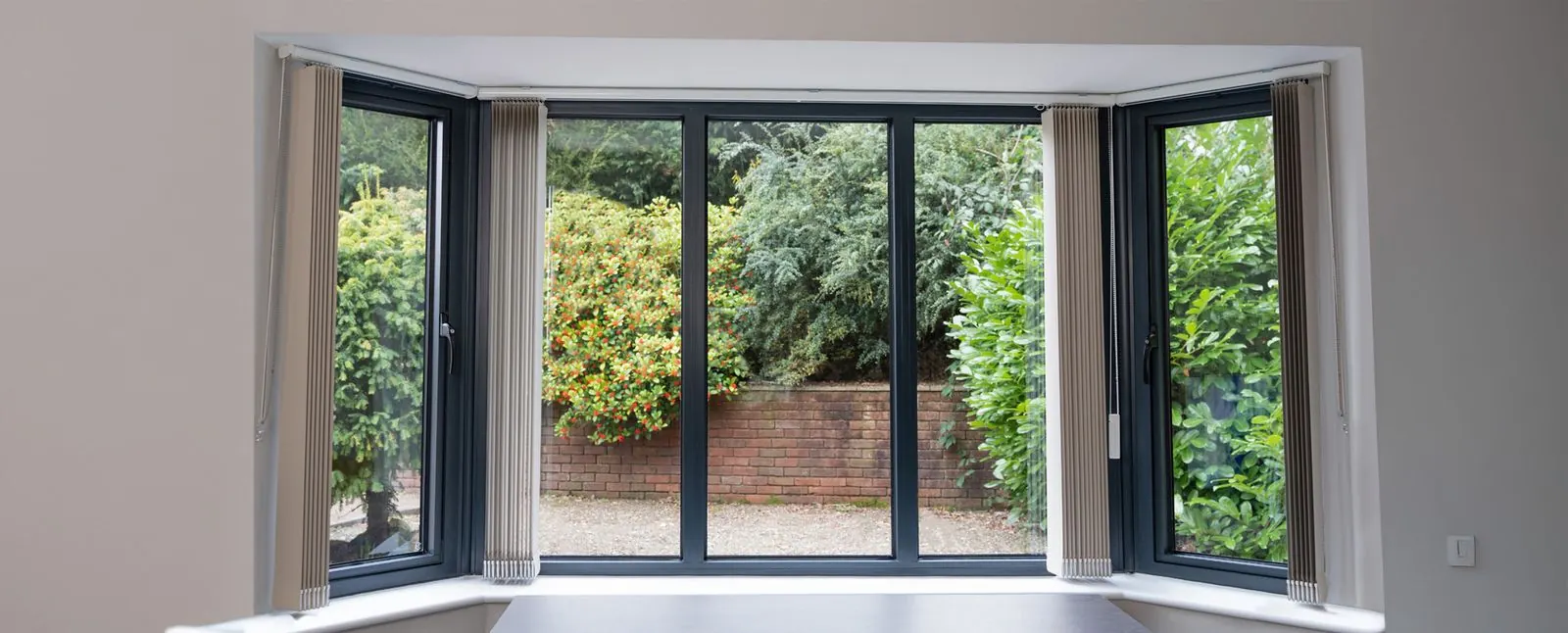
Aluminium is a structural material, so it holds large panes on a slender section. That is the whole argument, and everything else follows from it. A thinner frame carrying the same opening means more daylight, a bigger view, and proportions that suit both a contemporary rear extension and a Victorian elevation where the original windows were steel.
The performance objection people remember, that aluminium is cold, belonged to the unbroken frames fitted before the 1990s. Every system we install is thermally broken: the inner and outer aluminium sections are separated by a polyamide barrier, 32mm on our casement range and 35mm on the tilt and turn, which stops heat crossing the frame and keeps the internal surface above dew point. That is why modern aluminium reaches whole-window U-values from 0.84 W/m²K, and why the condensation stories no longer apply.
Where aluminium genuinely earns its premium over uPVC: slim sightlines on a principal elevation, single panes beyond what uPVC can hold, structural corners with no post, steel-look replacements on period properties, and anything where the window is part of the architecture rather than a hole in a wall. Where it does not: a standard rear casement in a suburban semi, where uPVC does the same job for less. We will tell you which of those you are in.
The aluminium window range we fit
Six systems, each solving a different problem. All are thermally broken, all take double or triple glazing, all are powder-coated to any RAL colour, and all carry a 10-year product guarantee.
| System | Best for | U-value from | Glazing | Acoustic |
|---|---|---|---|---|
| APX Casement | Side-hung and top-hung projecting windows, the everyday workhorse | 0.9 W/m²K | 23-44mm | Up to 45 dB |
| APX Flush Casement | Sash sitting flush with the frame face, cleaner elevation | 1.2 W/m²K | 23-44mm | Up to 44 dB |
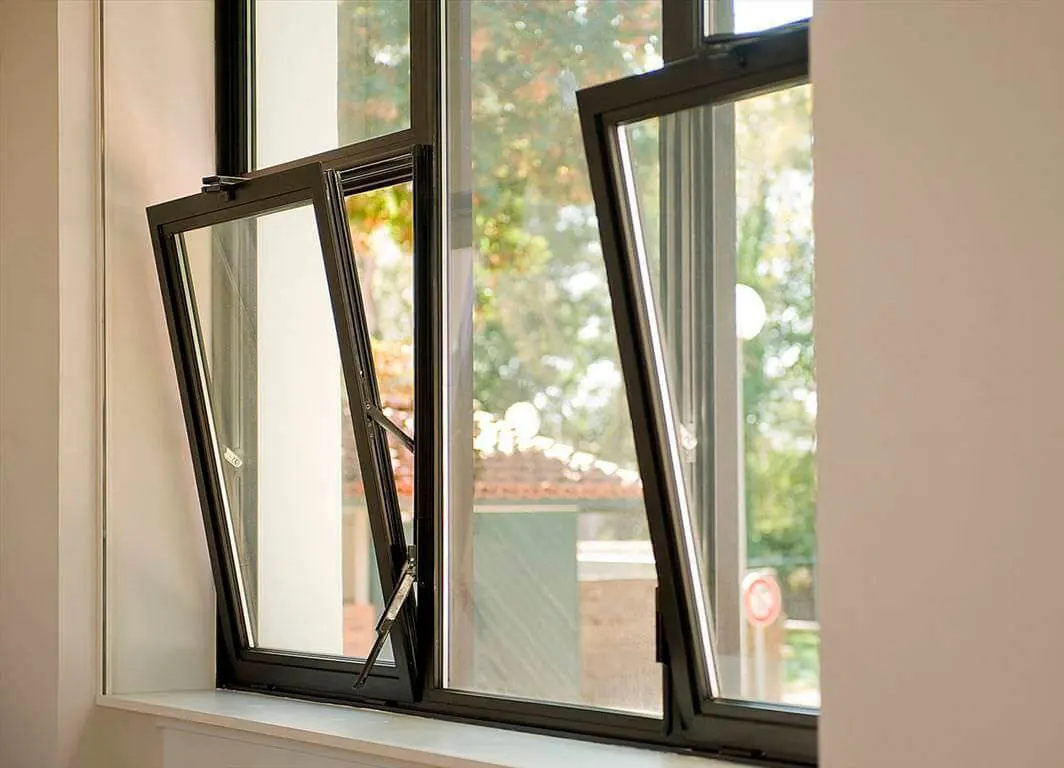
| APX70 Tilt & Turn | Hidden sash, 66mm visible frame, best thermal figure in the range | 0.84 W/m²K | Up to 40mm | Up to 46 dB |
| APX Full Glass | Fixed picture windows, single panes up to 4m wide, 500kg of glass | 0.9 W/m²K | Structural | Up to 45 dB |
| APX Corner | Structural 90° or 135° corners with no post or mullion | 1.1 W/m²K | 28-41.5mm | n/a |
| APX Period style | Steel-look replacement, 59mm typical sightline, 47mm frame depth | 1.6 W/m²K | 24-36mm | n/a |
Technical detail behind those headline numbers: the casement range runs a 70mm thermally broken frame with 1.6mm profile walls and a 32mm polyamide bar, tested to Class 4 air permeability, E1200 watertightness and CE2400 wind resistance, with heavy-duty sashes to 1800 × 1800mm and 100kg. The steel-look range is tested to Class 4 air permeability, 5A to 7A watertightness and AE2400 wind resistance, and weather tested to BS 6375 Part 1. PAS 24 security specification is available across the range.
How we quote aluminium windows
There is no price list. Every job is quoted after a free survey, because the size of each opening, the glass, the colour, access and the work around the frame all change the price. Each quote includes VAT, frame, sealed units, fitting, removal and disposal of the old window, and FENSA self-certification.
Thermal performance and Building Regulations
Replacement windows are controlled work under the Building Regulations whether or not planning permission is involved. The standards are specific, and they are worth knowing before you compare quotes, because a cheap window that fails them is not a saving.
| Requirement | Standard |
|---|---|
| Maximum whole-window U-value on a replacement | 1.4 W/m²K, or Window Energy Rating Band B minimum |
| No downgrade | The new window must also be no worse than the one it replaces |
| Background ventilation, habitable rooms and kitchens | Minimum 8,000mm² equivalent area |
| Background ventilation, bathrooms | Minimum 4,000mm² equivalent area |
| Heritage exception where character must be maintained | Centre-pane U-value no worse than 1.2 W/m²K, or low-E secondary glazing |
| Certification | FENSA self-certification, Apex Glazing Reg 40373 |
Those figures come from Approved Document L Volume 1, 2021 edition (Table 4.2 and paragraphs 4.8 and 4.10) and Approved Document F Volume 1, 2021 edition (paragraph 3.15). Every aluminium system on this page clears the 1.4 W/m²K threshold comfortably at its standard specification, with the tilt and turn reaching 0.84 W/m²K. For what those numbers mean in a real house, see our guide to window U-values.
Aluminium or uPVC, honestly
Aluminium is not better than uPVC. It is different, it costs more, and it is the right answer in specific circumstances rather than all of them.
| Factor | uPVC | Aluminium |
|---|---|---|
| Frame profile | 70mm standard or flush | 70mm frame, slimmer visible section |
| Best U-value we fit | From 0.93 W/m²K | From 0.84 W/m²K |
| Single-pane capability | Modest, the material needs bulk to stay rigid | Fixed panes to 4m wide and 500kg of glass |
| Structural corners, no post | Not possible | Yes, 90° or 135° |
| Steel-look period replacement | Approximation only | 59mm sightlines, stepped profile |
| Finish | Foils and woodgrains | Powder coat, any RAL, dual colour |
| Typical fitted price per window | Quote required | Quote required |
If the window is standard-sized, on a rear elevation, and nobody is going to study the sightline, uPVC is the rational choice and we fit plenty of it. The longer comparison is on our uPVC vs aluminium page.
Steel-look aluminium for period properties
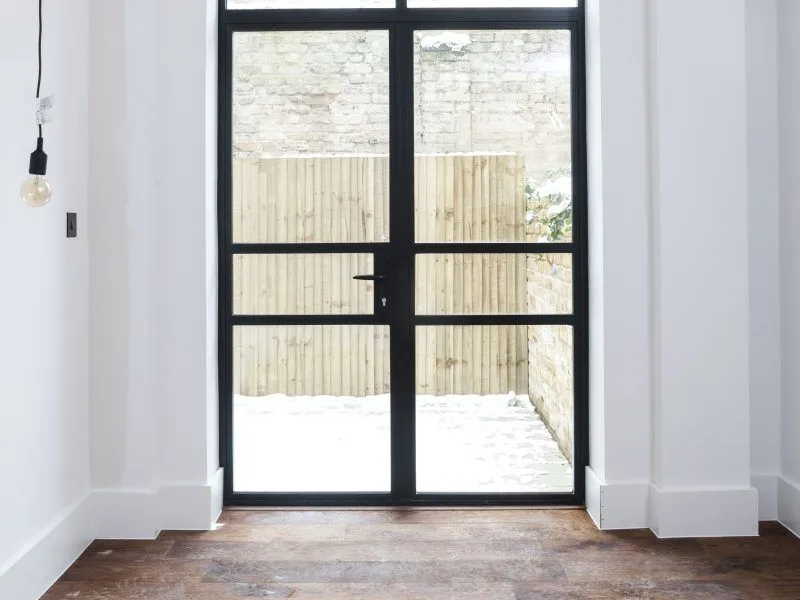
A great many London houses, particularly 1920s and 1930s stock and post-war conversions, were built with steel windows. The original profiles are very narrow, square-edged and stepped, which is exactly what a standard modern casement cannot replicate. Our steel-look range is built for that job: a 47mm frame depth with typical sightlines of 59mm, a polyamide thermal break, internally beaded for security, and a matt black finish in the same register the originals were painted in.
Indoors, the same language works as glazed screens and doors. Our internal steel-look system runs a 35mm frame depth with sightlines from 35mm, in 6063 T6 alloy to BS EN 755-9 and BS EN 12020, glazed at 6, 8, 10 or 18mm, with pivot doors to 2000 × 2500mm, sliding leaves to 100kg and up to 38 dB acoustic reduction, powder coated with a 25-year finish guarantee. See internal steel-look screens and doors.
On planning: being in a conservation area does not by itself require permission to replace windows on a house. What requires it is an Article 4 Direction covering windows at your address, or a listed building. Steel-look aluminium is frequently the specification that satisfies a conservation officer where standard replacements would not. Our planning permission guide explains how to check, and steel window replacement options covers the product side.
Colours, finish and upkeep
Powder coating is a baked-on polyester finish, not paint, and it is the reason aluminium windows never need redecorating. Any RAL colour is available in matt, satin, gloss or textured, and dual colour lets the inside face differ from the outside, so you can run anthracite externally and white or a warm grey internally. Standard stock colours are Black RAL 9005, Anthracite Grey RAL 7016 and White RAL 9016. Marine-grade coatings are available for exposed and coastal sites. Our powder coating is applied to BS EN 12206-1.
Maintenance is washing, clearing the drainage slots in the bottom of the frame, and lubricating hinges once a year. Aluminium does not rot, warp, swell or need repainting, and there is no plasticiser to degrade. See how long aluminium windows last for the detail.
Manufacturer, supplier or installer?
People search for aluminium window manufacturers and suppliers in London when what they usually need is a single accountable party. Apex Glazing designs and specifies the system, has the frames fabricated to your surveyed openings, and fits them with our own installation teams rather than subcontracting the fix. One survey, one quote, one guarantee, and one number to call if something is wrong.
Practically, that matters most at the awkward points: getting the structural opening right, co-ordinating a steel with your builder, sizing a lintel above a corner window, handling a level threshold, or working out how a 4m pane physically reaches a terraced rear elevation. Those are survey problems, not catalogue problems.
You get a 10-year guarantee on the product and a 10-year guarantee on the installation, with an insurance-backed warranty. Eligible replacement work also gets FENSA self-certification (Reg 40373) notified to your local authority, with the certificate issued to you for when you sell.
Frequently asked
How much do aluminium windows cost in London?
Request an itemised quote for your opening and specification. Check the supply, installation and preparation work included before comparing prices.
What U-value do aluminium windows achieve?
Across the range we fit, whole-window U-values start at 0.84 W/m²K on the tilt and turn, 0.9 W/m²K on the casement and full-glass windows, 1.2 W/m²K on the flush casement, 1.1 W/m²K on structural corners and 1.6 W/m²K on the steel-look period style system. Building Regulations require a maximum of 1.4 W/m²K or Window Energy Rating Band B for a replacement window, so everything except the period style profile clears the standard on its base specification, and the period style range is normally specified where character requirements apply.
Are aluminium windows worth the extra cost over uPVC?
Worth it when you need a slim visible section on a principal elevation, single panes larger than uPVC can carry, a structural corner with no post, or a steel-look replacement on a period property. Not worth it for a standard rear casement in a typical semi, where uPVC delivers comparable thermal performance for less. We would rather tell you that at survey than sell you the wrong material.
Do aluminium windows cause condensation?
No. Condensation on aluminium is a memory of pre-1990s frames with no thermal break, where the outer aluminium chilled the inner face below dew point. Every system we fit is thermally broken, with a 32mm polyamide barrier on the casement range and 35mm on the tilt and turn, which keeps the internal frame surface warm. If you do see condensation on a modern thermally broken frame, the cause is almost always room humidity and blocked background ventilation rather than the window.
How big can a single aluminium pane be?
Our fixed full-glass windows take a single pane up to 4m wide carrying up to 500kg of glass, with a 45mm visible frame outside and typically under 20mm inside. Opening sashes are more limited because the hardware has to carry the weight: heavy-duty casement sashes go to 1800 × 1800mm at 100kg. Corner windows go up to 3m high with a structurally bonded silicone joint and no post.
Can I get aluminium windows in any colour?
Yes, any RAL colour, in matt, satin, gloss or textured finish, with dual colour available so the inside and outside faces differ. Black RAL 9005, Anthracite Grey RAL 7016 and White RAL 9016 are the standard stock colours. Coating is applied to BS EN 12206-1, and marine-grade coatings are available for exposed sites.
Are aluminium windows secure?
PAS 24 security specification is available across the aluminium range, with multi-point locking and internal beading. Aluminium is inherently stiffer than uPVC, so the frame itself resists levering, and there is no plasticiser to degrade over decades. If you need a specific certification for an insurer or a Secured by Design requirement, tell us at survey and we will specify to it.
Are aluminium windows suitable for conservation areas?
Often, yes, and steel-look aluminium is usually the reason. Where the original windows were steel, a 59mm-sightline steel-look aluminium replacement reproduces the profile far more convincingly than a standard casement in any material. Where the originals were timber sashes, timber or a period style-profile alternative is normally preferred on the principal elevation. Conservation area status alone does not require planning permission for a house; an Article 4 Direction covering windows does.
Do you fit aluminium windows across all of London?
We work across west, south-west and central London and into Surrey, with our own installation teams. We are honest about range: if you are at the far eastern edge of Greater London, ask us before you invest time in a quote, because we would rather say no than send a subcontractor we do not control.
How long does an aluminium window installation take?
Most window installations are completed in one to two days. Full-house or multi-room replacements run three to seven days. Corner windows and anything needing a new lintel take longer because the structural work has to be sequenced with your builder. You get a precise schedule at survey stage.
Do aluminium windows need planning permission?
Usually not. Replacing windows in the same openings on an unlisted house that is not covered by an Article 4 Direction is not development, so no application is needed. Changing the size or position of an opening, or forming a new one, does need householder planning permission. Flats have no householder permitted development rights. Building Regulations apply either way. Full detail is in our planning permission guide.
Can you match new aluminium windows to existing ones?
Yes. We RAL colour-match new frames to existing units and replicate sightlines, glazing bar layouts and hardware style, which matters if you are replacing a house in phases. Bring photographs to the survey or we will measure the existing windows so the new ones read consistently alongside them.
Where we fit aluminium windows across London
We survey, supply and install across west, south-west and central London and into Surrey, using our own teams. Frequently worked areas include Richmond, Twickenham, Chiswick, Ealing, Hammersmith, Fulham, Putney, Wimbledon, Kingston, Hounslow, Brentford, Teddington, Surbiton and Weybridge. The complete list is on areas we cover.
Related: slimline sliding doors if you are opening up a rear elevation at the same time, double glazing specifications, Passivhaus-standard windows.